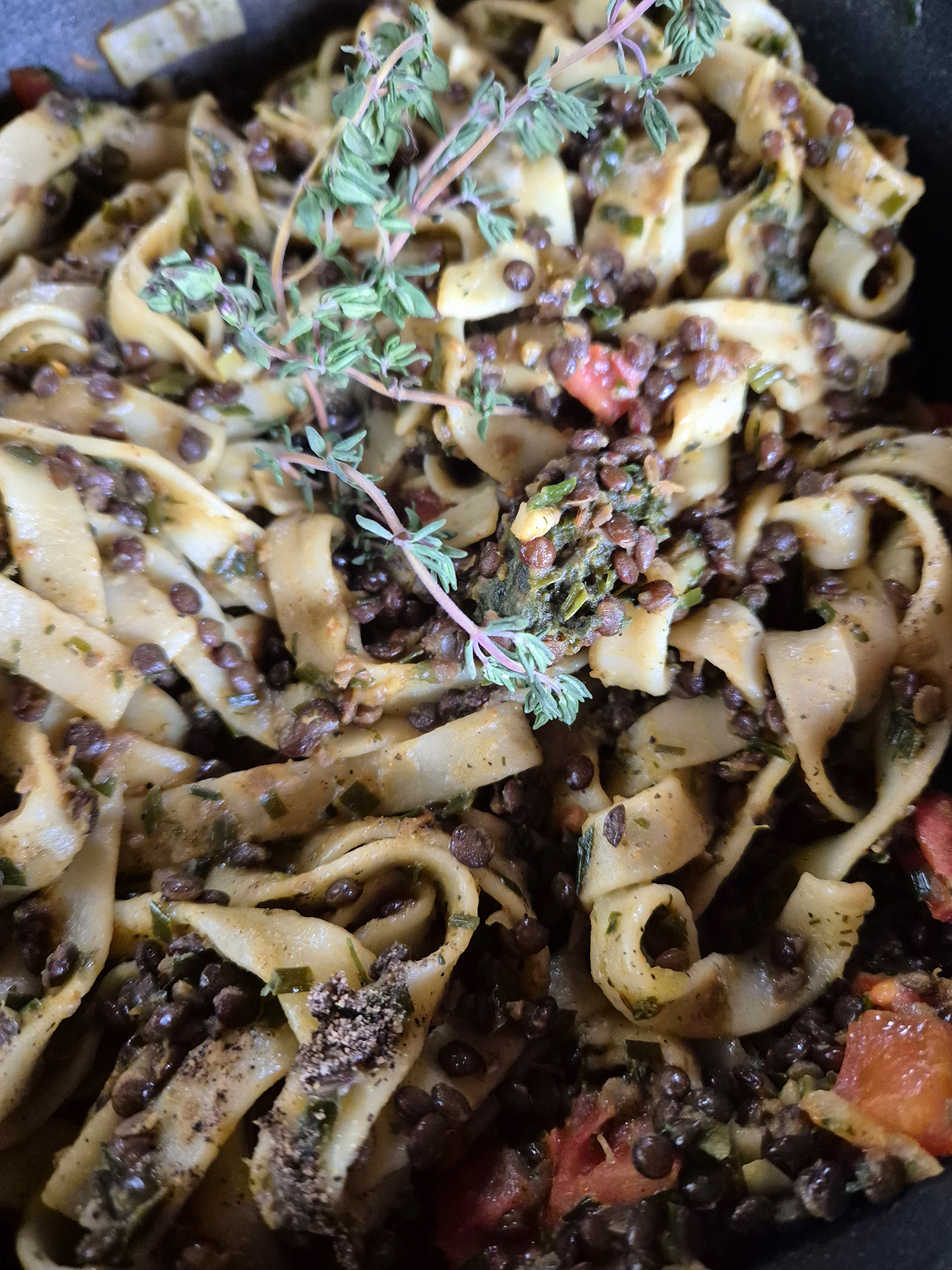
Ingredients for 4 people:
approx. 250 g beluga lentils
a little coarse sea salt
approx. 400 g ribbon pasta
2 tomatoes
2 shallots
2 garlic cloves
rapeseed oil
⅛ l white wine
¼ l soya cream
herb salt
freshly ground black pepper
cumin
nutmeg
chilli powder
thyme
a few sprigs of fresh parsley
½ bunch of chives
fresh dill
In addition:
a few sprigs of fresh thyme
Method:
1. Rinse the beluga lentils and cook in a saucepan with plenty of water for about 20–25 minutes until tender. Then drain and rinse with cold water.
2. Bring the water to the boil in a saucepan, add a little whole sea salt and cook the linguine until al dente. Drain, reserving a little of the pasta water.
3. In the meantime, wash the tomatoes, remove the core and dice the tomatoes into small cubes.
4. Peel the shallots and chop them finely.
5. Peel the garlic, remove the germ and slice it finely.
6. Heat the rapeseed oil in a frying pan and gently fry the chopped shallots with the garlic slices.
7. Then add the beluga lentils and the diced tomatoes and continue to fry them together.
8. Deglaze the pan with the white wine and a little pasta water.
9. Simmer for a few minutes, stir in the soya cream and add the linguine, cooked al dente.
10. Season the pasta mixture with herb salt, freshly ground black pepper, cumin, nutmeg, chilli powder and thyme.
11. Wash, dry and chop the fresh herbs, then stir them into the lentil and pasta mixture.
12. To serve, divide the herb-flavoured linguine between deep plates and garnish with a few sprigs of fresh thyme.
My tips:
- Instead of beluga lentils, you can use other types of lentils, such as Puy lentils, red lentils, brown lentils, etc.
- This pasta dish tastes delicious if you stir in some toasted pine nuts
Product description:
Beluga lentils are also known as the ‘caviar of pulses’. Their shiny black colour and small, delicate size are very reminiscent of the famous Beluga caviar from which they take their name, although they have nothing else in common. Beluga lentils are characterised by their culinary versatility in the kitchen, for example as a spread or in salads, stews, soups and fillings. Another advantage of Beluga lentils is that they do not fall apart as easily as their relatives when cooked.