Monthly Archives: April 2026

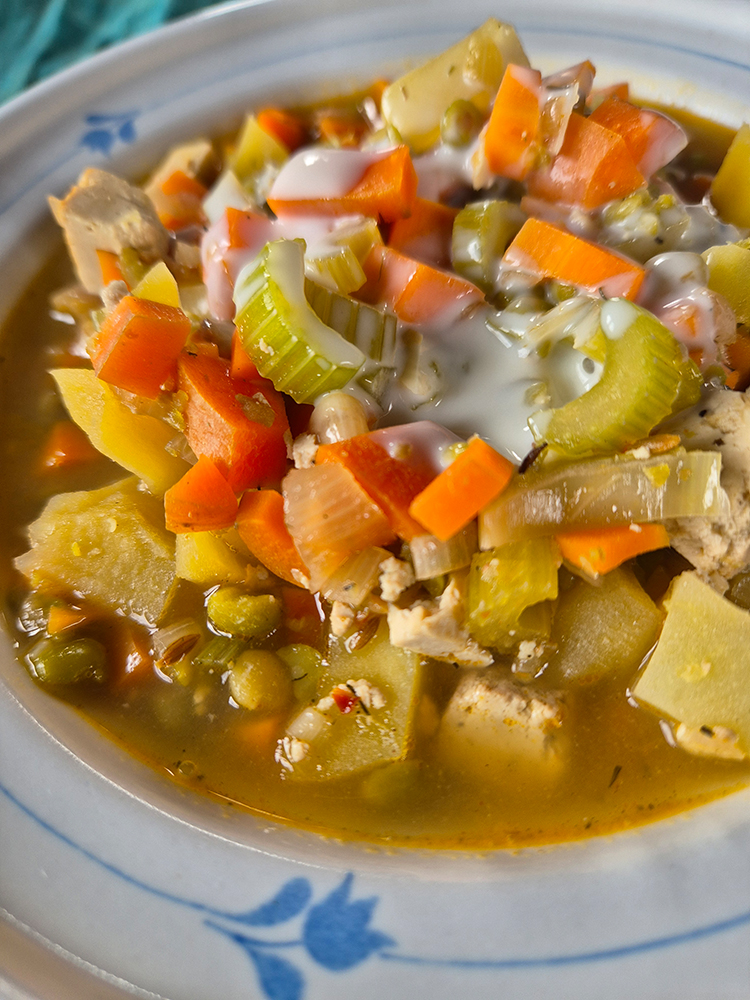
Spicy pea stew with smoked tofu (vegan)


Ingredients for about 4 people:

about 300 g dried peas
250 g potatoes
1 leek
250 g carrots
1 stick of celery
1 onion
1 clove of garlic
a few coriander seeds
1 pack of smoked tofu
1 tablespoon coconut oil
smoked paprika
savory
thyme
cumin
chilli flakes
ginger powder
a good 1 litre vegetable stock
1 bay leaf
tamari or shoyu
herb salt
freshly ground black pepper
In addition:
a little soy cream


Method:

1. For the pea stew, wash the dried peas thoroughly under running water using a sieve and leave to soak in fresh water overnight. The next day, once they have swollen, drain off the soaking water and then cook the dried peas – depending on the variety – for about 1 hour, i.e. until they are soft.
2. In the meantime, scrub the potatoes with a vegetable brush, trim if necessary, and dice.
3. Trim and wash the leek, then cut into thick rings.
4. Scrub the carrots with a vegetable brush, trim and dice.
5. Wash and trim the celery stalks, then cut them into rough strips.
6. Peel and finely chop the onion.
7. Peel the garlic, remove the central germ, then finely chop the garlic.
8. Crush the coriander seeds in a mortar.
9. Drain the smoked tofu and cut it into rough cubes.
10. Heat the coconut oil in a deep saucepan and gently fry the diced onion with the crushed coriander seeds.
11. Add the smoked tofu, chopped garlic, smoked paprika, savory, thyme, cumin, chilli flakes and ginger powder, and continue to fry the mixture.
12. Add the cooked dried peas along with the potatoes, carrots, celery, leek and bay leaf, mix briefly whilst stirring, then deglaze with the vegetable stock.
13. Leave to simmer for about 20–25 minutes.
14. Remove the bay leaf and season to taste with the tamari or shoyu, herb salt and freshly ground black pepper.
15. Serve in soup bowls and finish with a dash of soy cream.


My tips: 

    •  You can also prepare a larger portion. When reheated, the stew tastes even more flavourful.
    • This recipe can also be made with other dried pulses


Product description:

Organic shops mainly stock yellow or green dried peas. However, white, brown, grey, red, purple and marbled varieties are also available. Unpeeled varieties have the advantage of being particularly high in fibre. They are also available in a peeled form, as this makes them cook faster and makes them easier to digest. Dried peas, which can be bought split or halved, are sold as split or half peas. They are rich in protein and fibre. They are mostly used in soups, stews and purées. However, there are many other Middle Eastern recipes in which you can enjoy them.
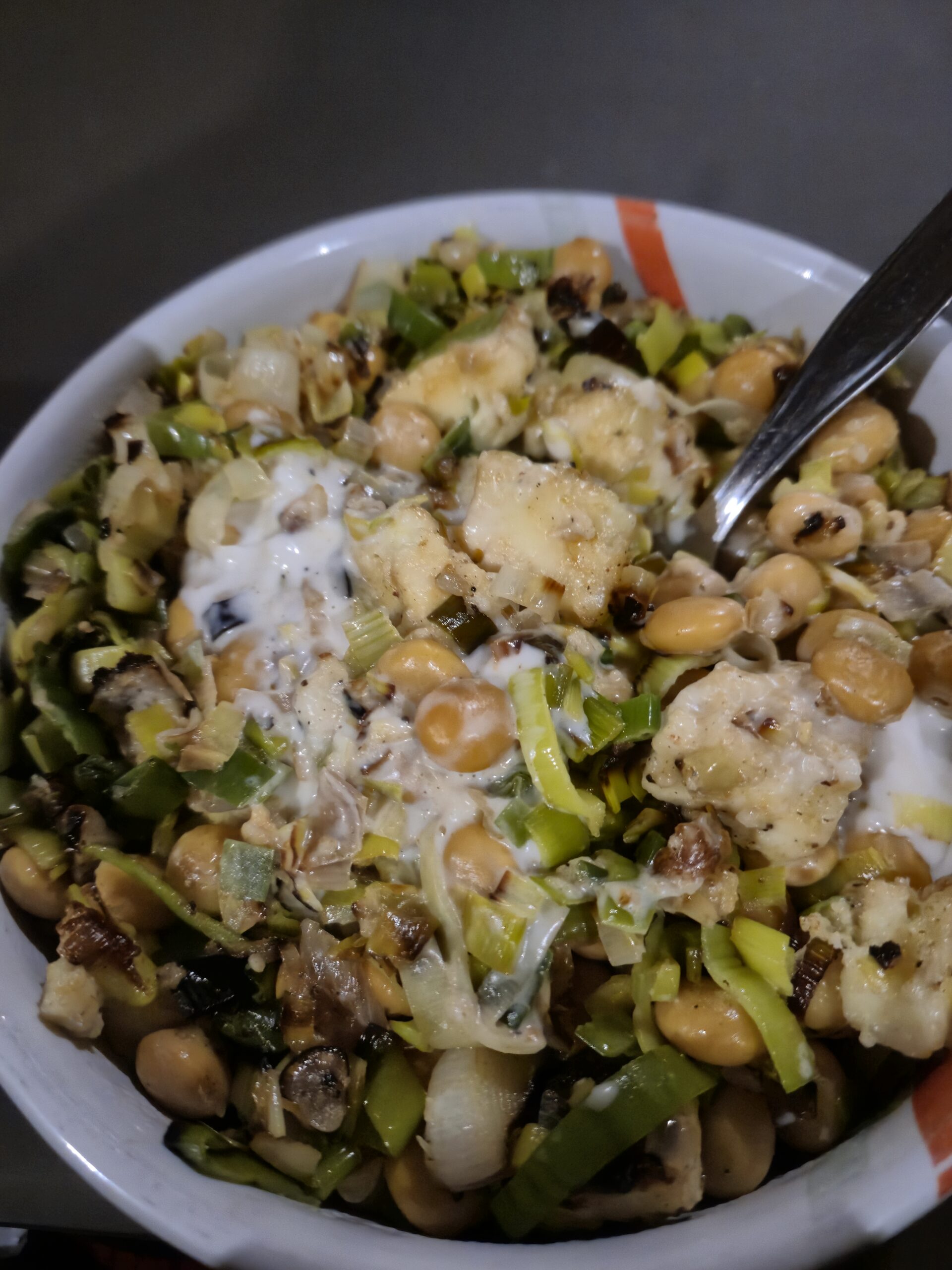
Tofu-Spinat-Reispfanne mit Kichererbsen (vegan)

Tofu-Spinat-Räispan mat Pois-chiche

Zutaten für etwa 4 Personen:

400 g Kichererbsen
250 g Langkornreis
etwa 700 g frischen Spinat
250 g Naturtofu
3 Schalotten
1 Knoblauchzehe
Rapsöl
Kräutersalz
frisch gemahlener schwarzer Pfeffer
Korianderpulver
Kardamompulver
Ingwerpulver
rotes Currypulver
geräuchertes Paprikapulver
Auβerdem:
Piment d’espelette

Zubereitung:

1. Für die Tofu-Spinat-Reispfanne die Kichererbsen aus dem Glas in einen Sieb geben und mit kaltem und klarem Wasser abspülen.
2. Den Langkornreis ebenfalls mit kaltem Wasser abspülen und in Salzwasser garen. Danach ab-gieβen und in einem Sieb abtropfen lassen.
3. Den Spinat putzen, waschen, von den Rippen zupfen und evtl. etwas zerkleinern.
4. Den Naturtofu in kleine Würfel schneiden.
5. Die Schalotten schälen und fein würfeln.
6. Den Knoblauch schälen, Mittelkeim entfernen und fein hacken.
7. In einer tiefen Pfanne das Rapsöl erhitzen und die zerkleinerten Schalotten mit dem gewürfel-tem Naturtofu anbraten.
8. Danach die abgetropften Kichererbsen und mit dem Langkornreis, dem gehacktem Knoblauch und dem abgetropften Spinat hinzufügen und während einigen Minuten garen.
9. Das Ganze mit Kräutersalz, frisch gemahlenem schwarzem Pfeffer, Koriander-, Kardamom-, Ingwer-, rotem Currypulver und dem geräucherten Paprikapulver kräftig würzen.
10. Noch kurz aufkochen lassen mit Piment d’espelette bestäuben und sofort servieren.


Meine Tipps:

  • Getrocknete Kichererbsen über Nacht in kaltem Wasser einweichen. Am nächsten Tag das Wasser abgieβen und die Kichererbsen in frischem Wasser weich garen. Danach bis zur Weiterverarbeitung im Kochwasser ausquellen lassen.
  • Den Langkornreis läβt sich auch durch eine andere Reissorte ersetzen. Oder man probiert das Gericht mit Hirse, Gerste oder Hafer aus.


Produktbeschreibung:

Kichererbsen hängt namentlich von »cicer« ab, dem lateinischen Wort für Erbse. Sie sind ein Multitalent in der Küche und lassen sich rösten und dämpfen, als Zutat in Suppen, Eintöpfen, Salaten. Ebenfalls lassen sie sich auch pürieren, die Basis für eine Vielzahl von Spezialitäten, zum Beispiel Falafel und Humus. Das Abgieβwasser (Aquafaba), eine tierleidfreie Ei-Alternative. Aquafaba hat einen relativ neutralen Eigengeschmack und seine bindenden Komponenten gelten als Eiweissalternative zum Kochen und Backen. Die Kichererbsen sind reich an Eiweiss, Vitamin B und Ballaststoffen, d.h. sehr beliebt in der vegetarischen und veganen Ernährung.

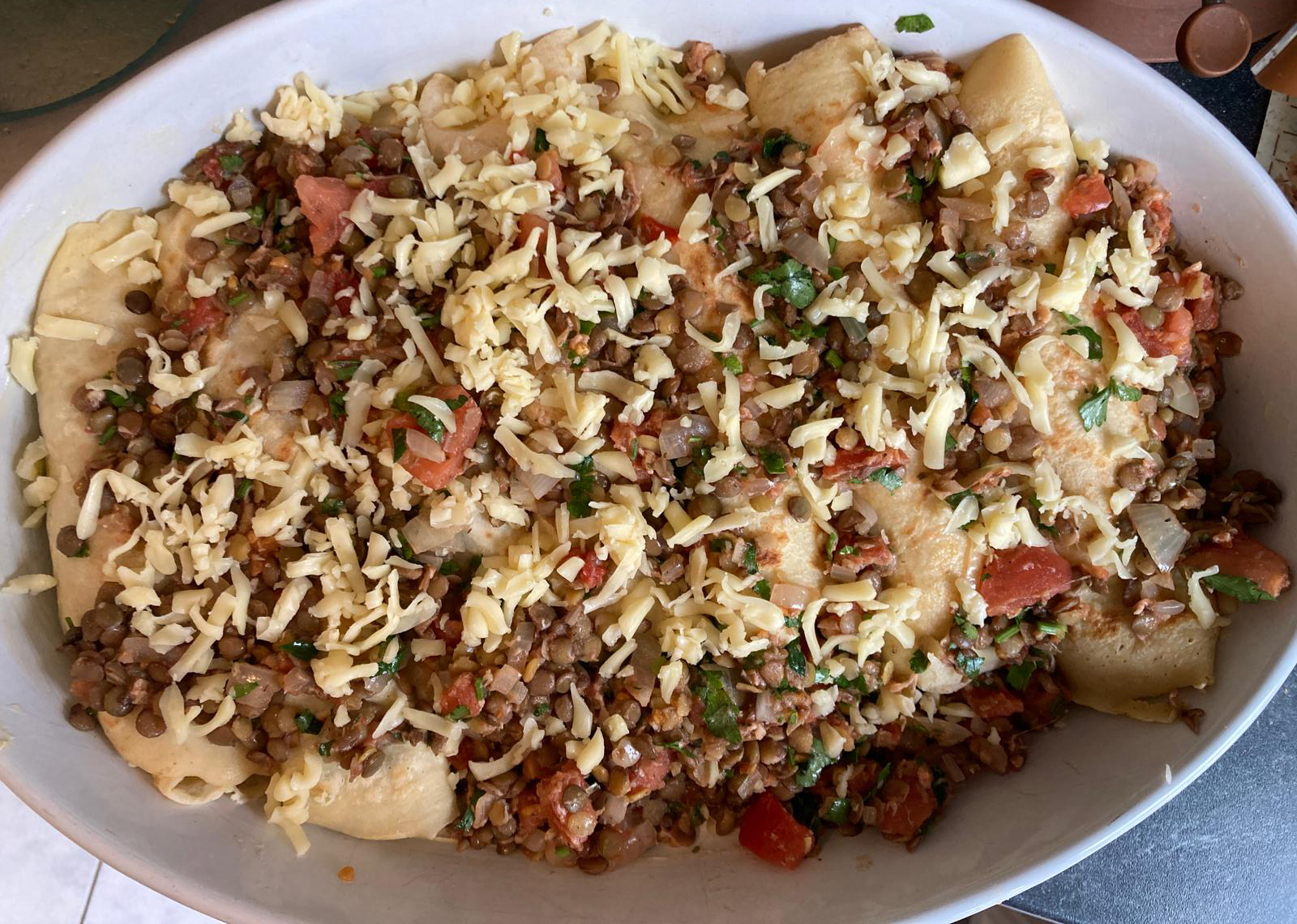
Herb pancakes with a lentil and tomato filling (ovo-lacto vegetarian)


Ingredients for about 4 people:

150 g Beluga or Puy lentils
just over ½ litre vegetable stock
a few sprigs of fresh parsley
thyme
100 g wheat or spelt flour
sea salt
2 eggs
⅛ litre milk
⅛ l sparkling water
150 g onions
1 clove of garlic
400 g tomatoes
100 g Comté cheese
2 tablespoons olive oil
herb salt
freshly ground black pepper
In addition:
oil for frying the pancakes and greasing the baking tin
a few sprigs of chives


Method:

  1. For the lentil filling, rinse the lentils under cold water. Bring the vegetable stock to the boil, add the drained lentils, cover and cook over a low heat for about 30 minutes until al dente.
  2. Add a little more vegetable stock if necessary.
  3. Meanwhile, wash the parsley, spin-dry and chop finely.
  4. For the pancake batter, mix the wheat or spelt flour with a generous pinch of whole sea salt, the eggs, milk and mineral water until well combined. Cover and set aside.
  5. Peel and finely dice the onions.
  6. Peel the garlic, remove the central germ and finely chop.
  7. Blanch the tomatoes in boiling water, leave to stand briefly, then plunge into cold water and peel, removing the stalks and chopping the tomatoes into small cubes.
  8. For the pancakes, heat a shallow frying pan and add a little rapeseed oil. Stir the batter once more, mix in the chopped parsley and fry thin pancakes over a medium heat.
  9. Once the batter is used up, add the olive oil to the pan and sauté the onions and garlic until translucent, stirring constantly. Remove the pan from the heat, mix in the tomatoes and half the cheese, and season with thyme.
  10. Grease an ovenproof dish.
  11. Drain the lentils if necessary, then mix with the onion, tomato and cheese mixture. Season to taste with herb salt and freshly ground black pepper.
  12. Spread a little of the lentil mixture onto each pancake, roll them up and place them side by side – seam-side down – in the dish. Sprinkle the remaining cheese over the pancake rolls.
  13. Place the dish in the middle of the oven and bake the pancakes at 180°C until they are nicely browned.
  14. Wash the chives and chop them into small pieces.
  15. Before serving, sprinkle the chives over the pancakes


My tips:

          • This recipe appears in my first cookbook, *Natierlech genéissen*. It remains a favourite dish of my daughter Anne’s, just as it was back then; she sent me this photo after making it.
          • Instead of lentils, you can also use adzuki beans or kidney beans. This will increase the cooking time.
          • When making pancakes, you should always use sparkling mineral water. This makes the pancakes lighter and fluffier.