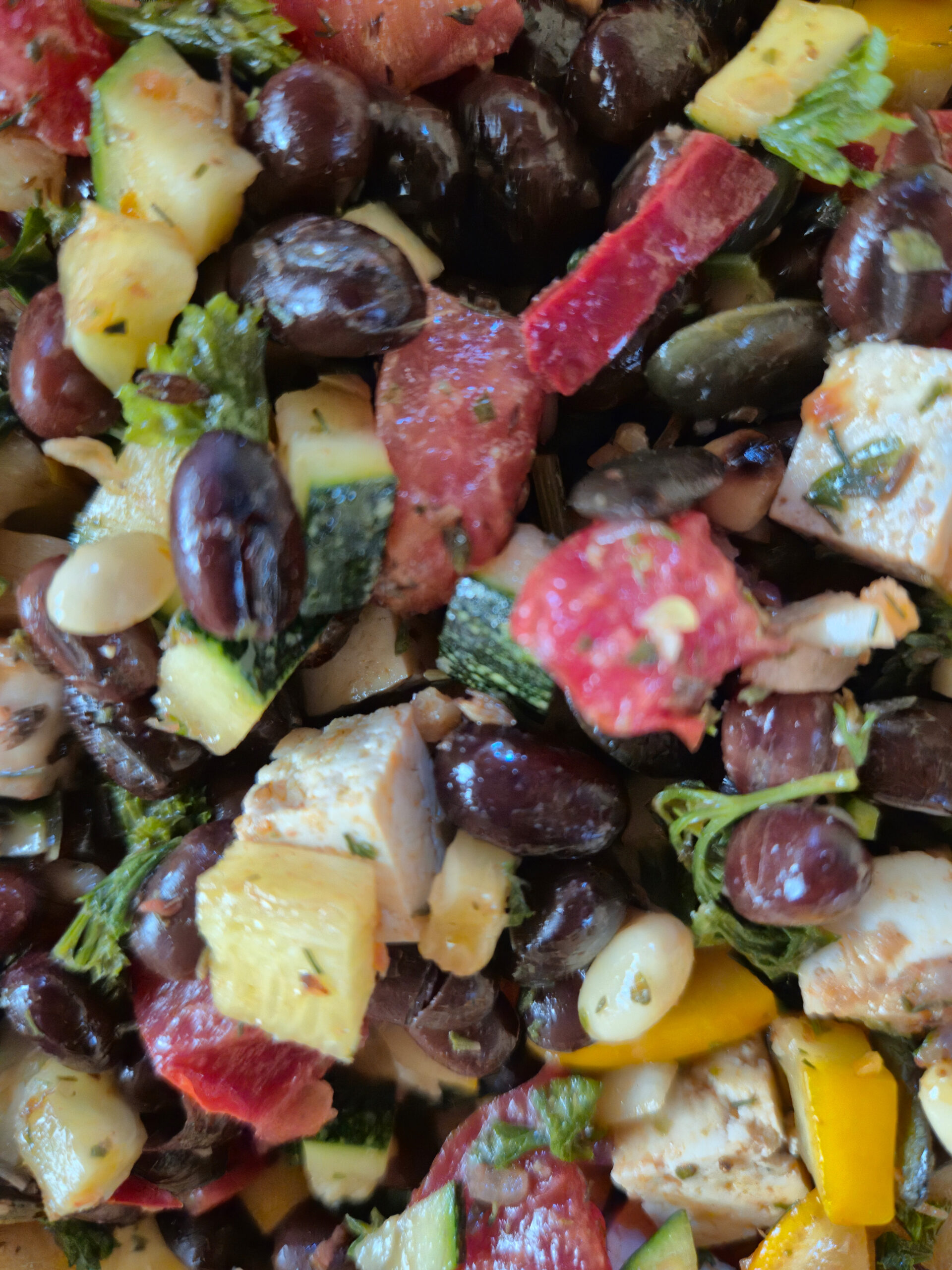
Ingredients for 4 people:
For the salad:
approx. 150 g dried adzuki beans
1 courgette
1 red pepper
200 g plain tofu
about 40 g pine nuts
For the vinaigrette:
1 shallot
1 clove of garlic
2 tablespoons olive oil
1 tablespoon linseed oil
1 tablespoon sesame oil
3 tablespoons apple cider vinegar
1 tablespoon red wine vinegar
herb salt
freshly ground black pepper
thyme
curry powder
smoked paprika
In addition:
sesame oil for frying the plain tofu
1 bunch of fresh coriander
40 g pine nuts
Method:
1. For the salad, soak the adzuki beans overnight in cold water. The next day, drain the water and cook the adzuki beans in fresh water for about 45 minutes. Remove from the heat and leave to soak for a while.
2. Wash, trim and dice the courgette.
3. Wash the pepper, remove the seeds and cut into fine strips.
4. Dice the plain tofu and lightly fry in a pan with a little sesame oil.
5. Toast the pine nuts in a frying pan without any fat.
6. For the vinaigrette, peel the shallot and dice it finely.
7. Peel the garlic, remove the central germ and chop finely.
8. In a salad bowl, mix the olive, linseed and sesame oils with apple cider vinegar and red wine vinegar, then season with herb salt, freshly ground black pepper, thyme, curry e and smoked paprika.
9. Wash the fresh coriander, spin-dry it and chop it finely.
10. Now add the drained adzuki beans, the diced courgette, the strips of pepper and the fried tofu to the vinaigrette and mix well.
11. Finally, sprinkle with the chopped coriander and toasted pine nuts.
My tips:
-
- The adzuki beans can easily be replaced with other pulses, e.g. kidney beans, lentils (no soaking required), chickpeas, etc.
- If you’re not a fan of coriander, replace it with 1 bunch of parsley.
Product description:
The adzuki bean is a legume native to Asia. It is small, red or green depending on the variety, slightly sweet, elongated and very rich in plant protein and other nutrients. At the same time, they are low in fat and sugar. This is why the Japanese also use them to make sweets.
